
How The Knife Angel’s Tour of the UK Helps Raise Awareness Of Knife Crime
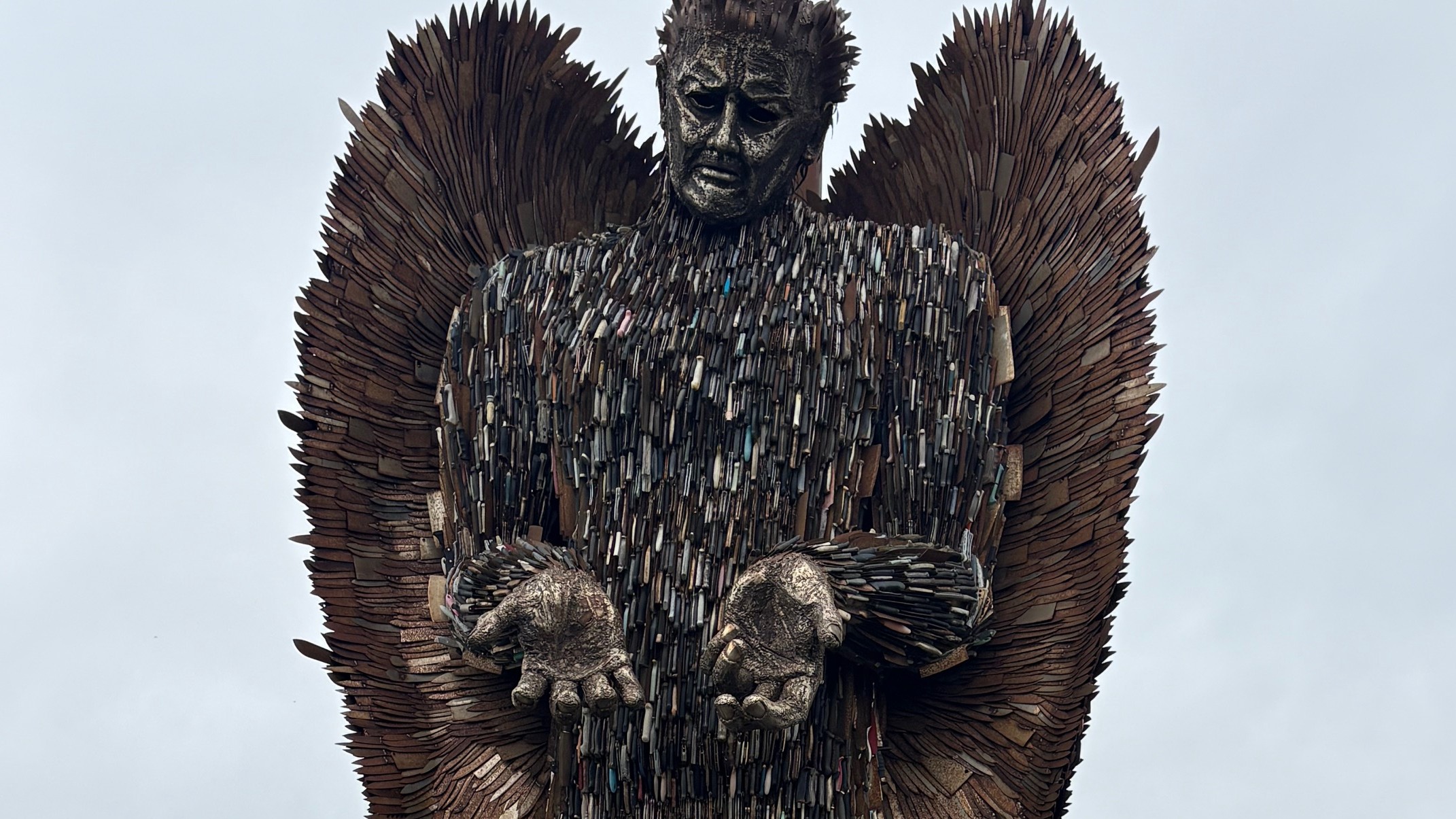
Memorial Combines Incredile Artistry and Poignant Reminder Of Severity of Knife Crime.
The issue of knife crime in the UK has once again returned to the national conversation following reports this week that a man has been sentenced to 23 years in prison for the stabbing and murder of a 15 year-old schoolgirl.
Incidents like this inevitably raise difficult questions about prevention, policing, and how communities can work together to reduce violence.
One of the most striking public symbols of the campaign against knife crime is the Knife Angel – a 27-foot sculpture made entirely from confiscated and surrendered knives.
Created to highlight the devastating impact of violent crime, the monument has become a powerful visual reminder of both the scale of the problem and the role initiatives such as knife amnesties can play in tackling it.
What is the Knife Angel?
The Knife Angel – officially known as the National Monument Against Violence and Aggression – is a contemporary sculpture created by artist Alfie Bradley in collaboration with the British Ironworks Centre in Oswestry, Shropshire.
Completed in 2018, the sculpture stands approximately 27 feet (8.2 metres) tall and is constructed from 100,000 knives that were either surrendered during knife amnesties or seized by police forces across the UK.
The project reportedly cost around £500,000 to create and was designed with a clear purpose: to highlight the scale of knife crime and educate young people about the devastating consequences that violence can have on individuals, families and communities.
The role of knife amnesties
The creation of the Knife Angel relied heavily on knife amnesty schemes across the country. Around 200 knife banks were installed to allow members of the public to anonymously surrender weapons.
In addition, police forces contributed knives that had been seized during criminal investigations.
These amnesties serve several purposes.
They allow individuals to dispose of weapons safely without fear of prosecution, remove potentially dangerous items from circulation, and provide an opportunity for police and communities to raise awareness about knife crime.
For the Knife Angel project, each weapon donated or seized had to undergo a careful preparation process.
When the knives arrived at the British Ironworks Centre they were disinfected and blunted before being welded onto a steel frame that formed the body of the sculpture.
The wings were constructed by welding knives onto steel plates, creating a feather-like pattern that gives the monument its distinctive appearance.
Some of the knives used in the sculpture arrived in police evidence tubes, still bearing signs of violent crime. Their inclusion in the artwork serves as a stark reminder of the real human cost behind the statistics.
A memorial for victims
Having recently visited the British Ironwork Centre and seen the sculpture for myself, it is both incredible in it’s craft – as well as a stark reminder to the scale and range of weapons being carried on our streets.
From pocket knives, to large carving knives and meat clevers, the sheer range of weapons is both startling and chilling – and a reminder that these were all capable of ruining lives not only of their victims and their families, but with the severity of the crime, it is also those in possession of them.
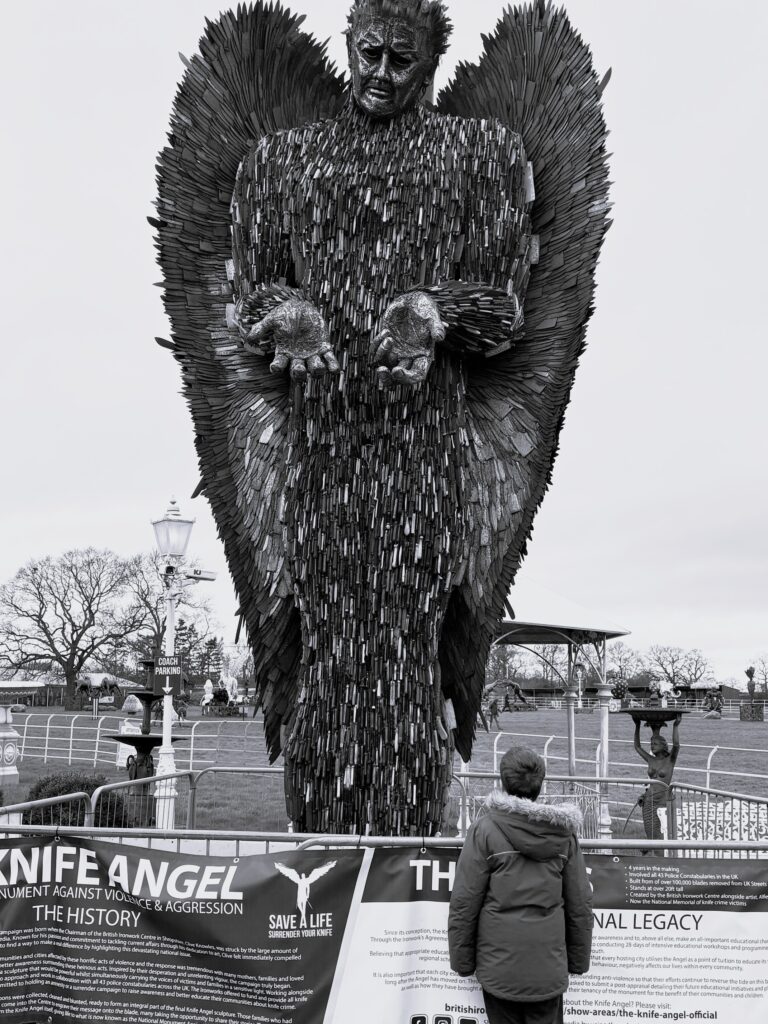
Families who had lost loved ones were invited to engrave messages on blades used in the sculpture. More than 80 families chose to include personal tributes, ensuring the monument carries the voices and memories of those directly affected by violent crime.
This personal element has made the sculpture particularly powerful during its nationwide tour, where communities are encouraged to reflect on the impact of knife crime and engage in conversations about prevention.
The National Anti-Violence Tour
Since its completion in 2018, the Knife Angel has travelled across the UK as part of a National Anti-Violence Tour. The aim of the tour is to raise awareness, support community education programmes and encourage young people to reject violence.
The sculpture has been displayed in numerous towns and cities including Aberystwyth, Birkenhead, Milton Keynes, Gloucester, Guildford, Crewe, Nuneaton, Lichfield, Colchester, Bolton, Walsall and Leeds.
During 2024 the monument continued its journey through locations such as Taunton, Weston-super-Mare, Sunderland and Southend-on-Sea before moving to Haverhill in Suffolk and later Perth in Scotland.
More recently, the Knife Angel has been exhibited in Newton Aycliffe in County Durham and Welwyn Garden City in Hertfordshire as part of its continuing programme of community engagement events.
Wherever the sculpture travels, it is typically accompanied by educational initiatives, talks, and outreach programmes involving schools, youth groups and community organisations.
Why initiatives like this still matter
Despite years of awareness campaigns, knife crime remains a serious concern in many parts of the UK. High-profile incidents – particularly those involving young people – highlight the urgent need for continued prevention efforts.
Initiatives such as knife amnesties, educational campaigns and community engagement programmes aim to address the problem before violence occurs.
By encouraging people to surrender weapons and by promoting awareness among young people, authorities hope to reduce the number of knives carried on the streets.
If you get chance to visit the statue, it is well worth taking a look and being both amazed by it’s artistic flare and reflective of what it symbolises.
How We Can Help.
If you have any questions regarding the information in this article or for charges relating to knife crime or murder, please don’t hesitate to call us now on 0161 477 1121 or email us.