
Latest Tommy Robinson Led Protest March and The Role of The Met Police
How Large Protest Marches Are Policed, The Right To March and The Crimes Being Looked Out For.
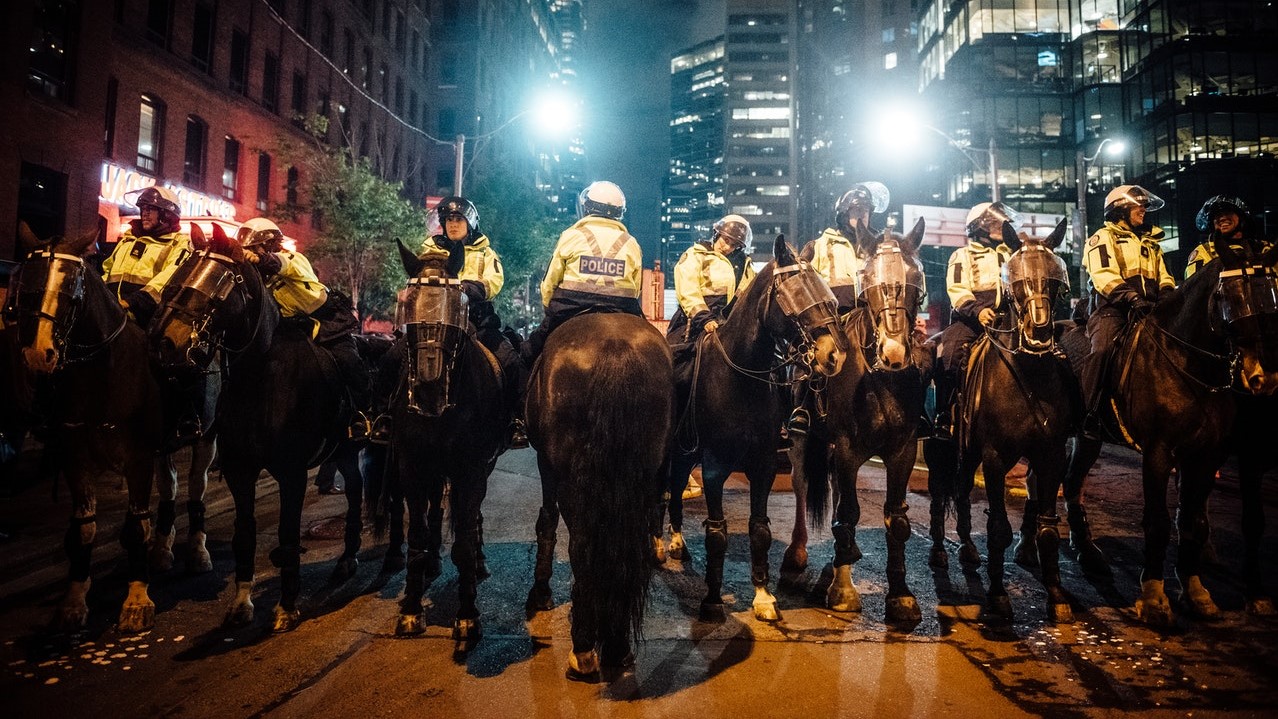
The Metropolitan Police have announced one of the largest public order operations seen in London in recent years ahead of major demonstrations planned in central London.
According to the Met, around 4,000 officers will be deployed across the capital during a day involving large-scale protests, counter-protests and the FA Cup Final at Wembley.
The policing operation has drawn significant public attention, not only because of its scale, but also because of the increasingly tense and politically charged atmosphere surrounding some modern demonstrations.
From a criminal defence perspective, the situation highlights the complex legal balance between protecting the right to protest and preventing disorder, hate crime and violence.
The right to protest in the UK
The right to peaceful protest remains a protected democratic freedom in the UK and is recognised under both domestic law and the European Convention on Human Rights.
Individuals are generally entitled to gather, march and express political views lawfully, even where those views are controversial, unpopular or provoke strong reactions.
However, protest rights are not unlimited. Police have powers under legislation including the Public Order Act 1986 and the Criminal Justice and Public Order Act 1994 to impose conditions where they believe there is a genuine risk of:
- serious public disorder;
- serious disruption to the community;
- intimidation;
- criminal damage;
- hate crime or incitement.
In this case, the Met stated that strict conditions would apply to both marches, including fixed routes, designated assembly areas and strict finishing times.
The inflammatory nature of modern protests
Modern protest movements can quickly become highly emotionally charged, particularly where events involve religion, race, immigration, international conflict or politically divisive figures.
The Met’s briefing referenced ongoing tensions linked to antisemitism, anti-Muslim hatred, terrorism concerns and fears within different communities across London.
Police also pointed to previous arrests linked to both protest movements, including allegations involving racially aggravated public order offences, support for proscribed organisations and violent disorder.
Large demonstrations can become particularly volatile where opposing groups are operating within close proximity to one another. Even where the majority of attendees intend to protest peacefully, a relatively small number of individuals can escalate tensions rapidly.
Police planning therefore often focuses heavily on separating rival groups and preventing direct confrontation.
The role of counter-protests
Counter-protests present some of the most difficult challenges in public order policing.
While individuals have the right to oppose demonstrations and express alternative political views, police must carefully assess the risk of rival groups coming into contact.
Historically, some of the most serious public disorder incidents in the UK have occurred where competing demonstrations have converged.
When policing counter-protests, officers will often consider:
- the size and makeup of each group;
- previous incidents linked to organisers or attendees;
- online intelligence and inflammatory rhetoric;
- the risk of disorder or violence;
- the potential impact on local communities;
- whether certain routes or locations increase tensions.
In the London operation outlined by the Met, considerable emphasis was placed on ensuring the two demonstrations remained physically separated throughout the day.
Police powers and criminal offences
The policing plan also demonstrates the increasingly assertive approach being taken towards public order enforcement.
The Met confirmed officers would make use of dispersal powers, stop and search powers, facial recognition technology and conditions imposed under the Public Order Act.
Officers also warned that arrests could be made for offences including:
- violent disorder;
- racially or religiously aggravated public order offences;
- stirring up hatred;
- supporting proscribed organisations;
- breaching protest conditions;
- criminal damage;
- assaults on police officers.
Importantly, criminal liability does not only arise from physical violence. Speech, chants, banners, placards and online activity connected to demonstrations can also become evidence in criminal investigations where police believe legal thresholds have been crossed.
Facial recognition and evidence gathering
The Met also confirmed that live facial recognition technology would be used during the operation.
The use of facial recognition at protests remains controversial and continues to raise concerns surrounding privacy, proportionality and civil liberties.
Police argue the technology assists in identifying wanted individuals and preventing disorder, while critics question oversight, accuracy and the long-term implications for protest rights.
From a criminal defence perspective, evidence gathered through facial recognition systems, CCTV, social media footage, drones and body-worn video may later form part of investigations and prosecutions.
Solicitors may carefully examine how evidence was obtained, whether deployments were lawful and whether identifications are reliable.
Balancing protest rights and public safety
Cases involving large demonstrations often generate difficult legal and political debates.
Police are required to strike a careful balance between facilitating lawful protest and protecting the wider public from intimidation, disorder or criminal conduct.
The challenge becomes even greater where protests involve highly sensitive international issues, allegations of extremism or significant community tensions.
While many people attending demonstrations do so peacefully and lawfully, police planning increasingly reflects concerns that organised groups, agitators or individuals seeking confrontation may exploit these events.
What To Expect This Weekend.
The Metropolitan Police operation planned for central London demonstrates the growing complexity of modern protest policing in the UK.
The right to protest remains a fundamental part of democratic society, but police also have legal duties to prevent violence, intimidation and hate crime where risks emerge.
From a criminal defence perspective, cases arising from demonstrations can involve highly complex questions surrounding freedom of expression, public order powers, evidence gathering and proportionality.
As public demonstrations become increasingly polarised and politically charged, the balance between civil liberties and public safety is likely to remain under intense legal scrutiny.
How We Can Help.
If you have any questions regarding public order offences or any legal representation for arrests whilst at a protest in court then don’t hesitate to call us now on 0161 477 1121 or email us.